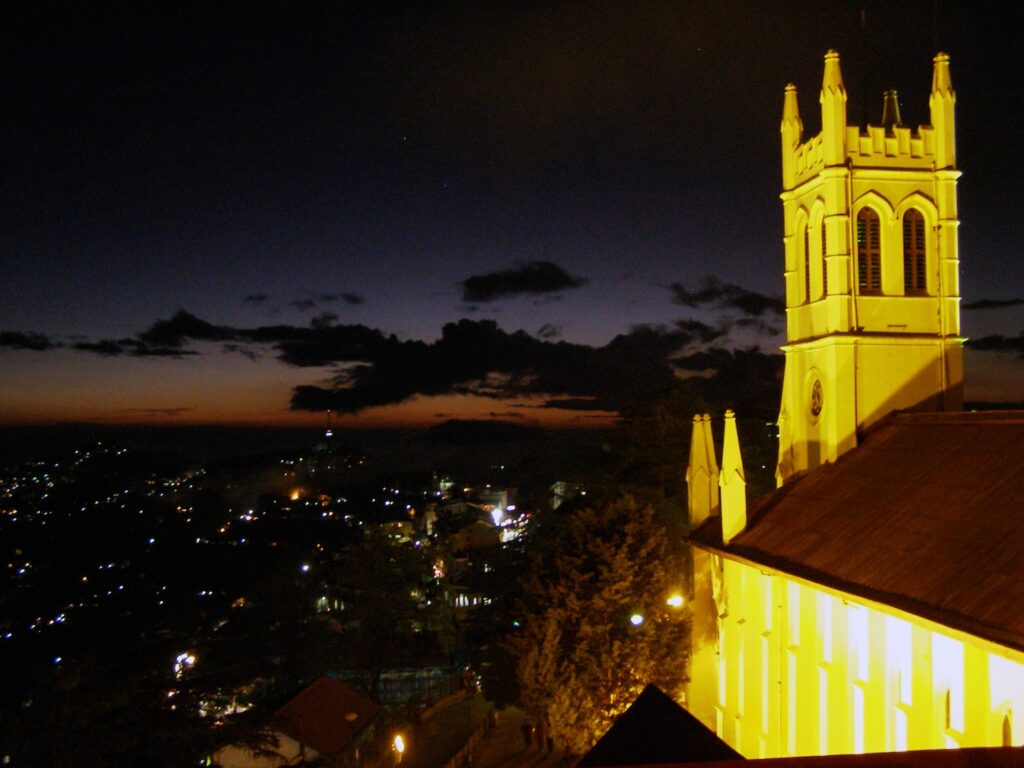
notes from shimla:
this tale is set in a town that
to our eyes, seems to reside amidst towering peaks,
yet in actuality, lies nestled in the foothills of the himalayas
What would captivate us in the Carpathians would be deemed a mere mound in northern India. And when the locals wish to be courteous, they’ll call it a hill, albeit a modest one.
Shimla emerged as a figment of British colonial desires in the embrace of the highlands
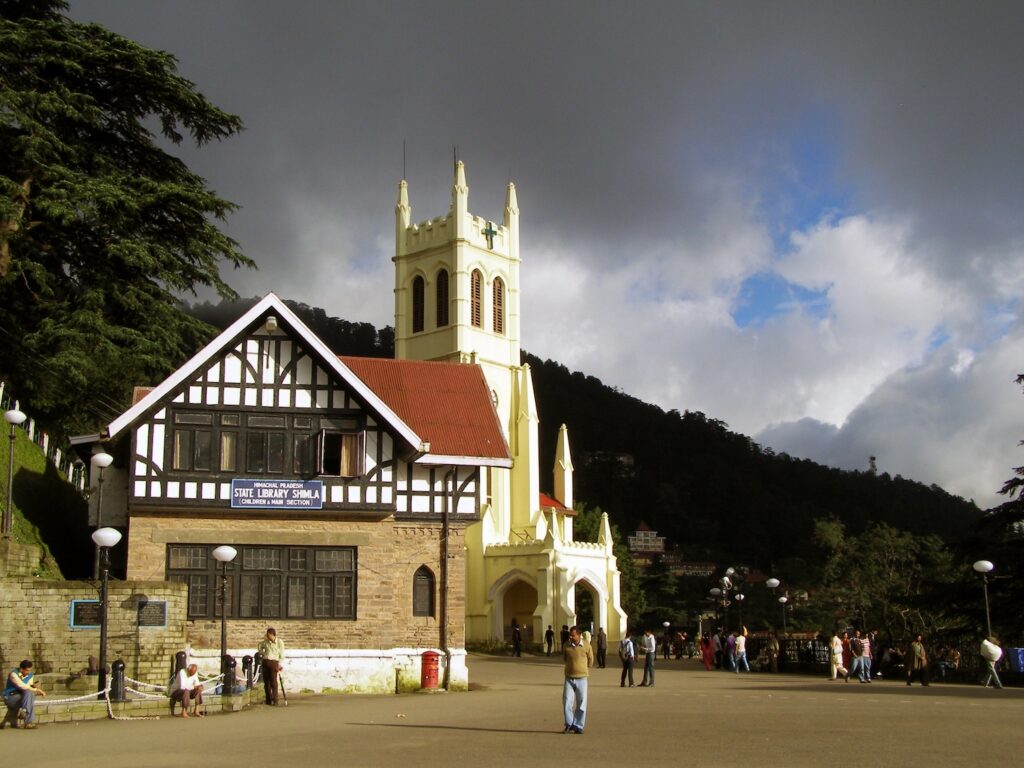
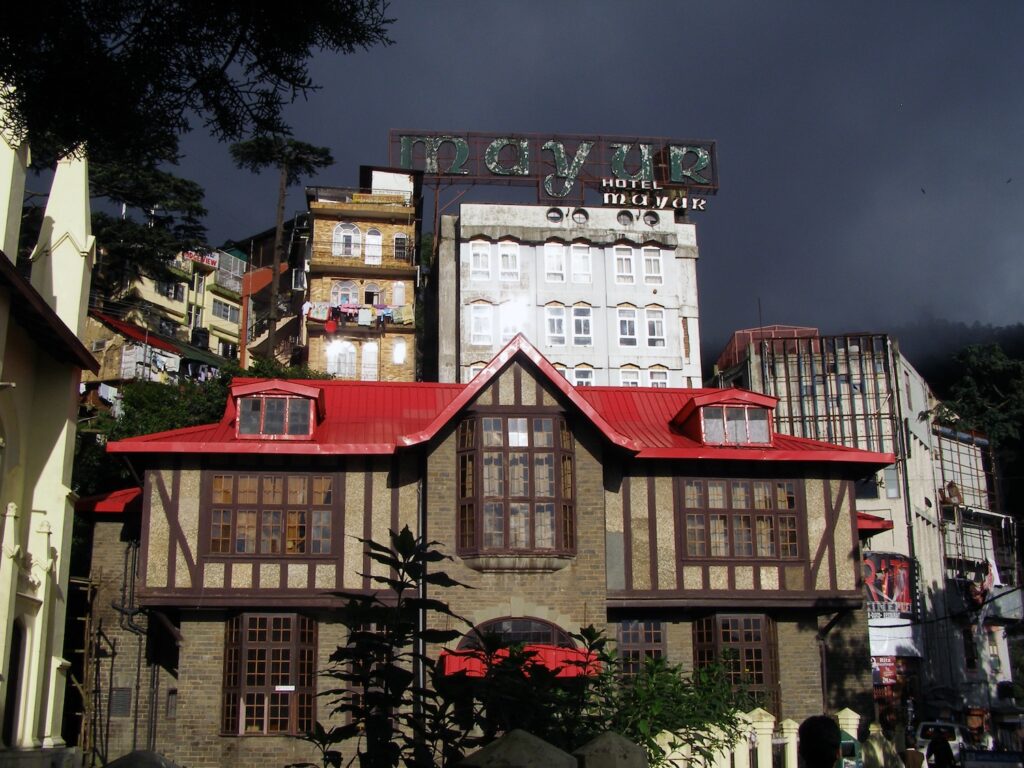
Yet, even as the empire’s sun had set, its echoes lingered in the valley, morphing through the ages: the hue of skin, tongues, and nationality. Both British and Indian might lay claim to Shimla’s sovereignty, mistaking their transient dominance for true reign.
Yet, the eternal monarch of this realm is Hanuman, the Monkey God. Perched atop a hill, soaring hundreds of meters above, his divine gaze sweeps the labyrinth of valleys carved amongst the hills. His progeny, the macaques, reign supreme, omnipresent as the pigeons crowding Venice’s squares. In Shimla, their presence is an inescapable reality, weaving into the fabric of life a worship, nuisance, and profound ambiguity characteristic of Hindu ethos towards these simian inhabitants.
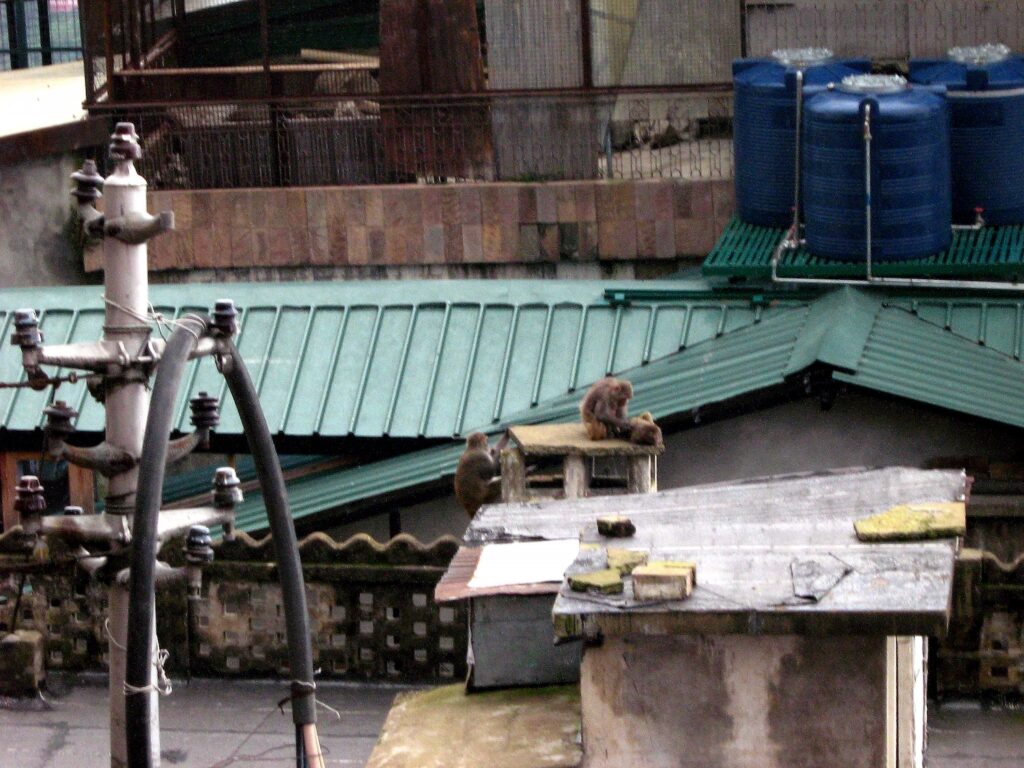
In a dance of contradiction, Indians pursue the wily monkeys, adept in the art of thievery, yet in the same breath, offer them sustenance, shielding them from any harm. For these creatures are not mere animals, but divine beings, servants and heralds of the formidable Hanuman.
Who, then, would dare to provoke the ire of a celestial guardian? Who would risk the wrath of the divine by harming his earthly charges?
We, of course, would never dare! Thus, as soon as we found the chance after arriving in Shimla, we embarked on the winding paths ascending the hill. From the very beginning, macaques accompanied us. A lot. A whole lot. More and more. I attempted to count them but quickly lost count. Along the way, a roadside vendor pointed to my sunglasses and cautioned me to hide them. I thanked her for the advice and promised to do so.
Dragon, blessed with a perfect but short-sighted vision, asked if the warning applied to him. I assured him: “No, it’s only about sunglasses, not corrective ones.”
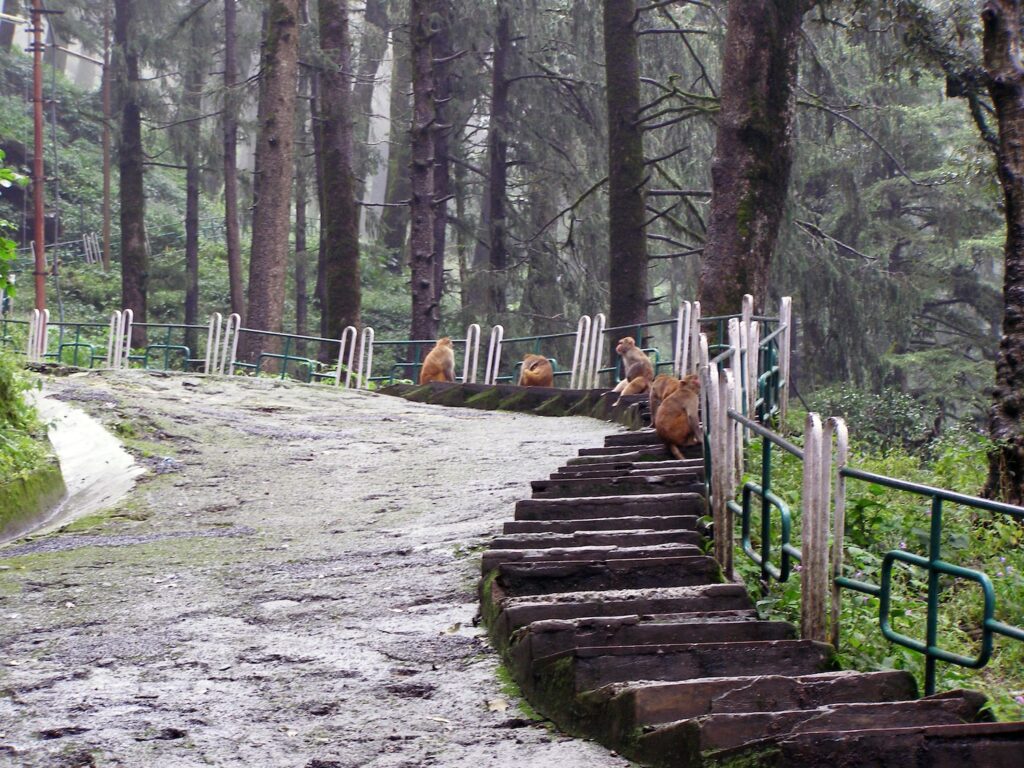
We continued our ascent to the temple. Fatigued, I trailed behind. Of a sudden, Dragon’s head transformed for a fleeting moment into a sizable monkey ass; Dragon turned around, squinting without his glasses, his arms outstretched in a helpless gesture, dramatically declaring:
“That’s it for me, sightseeing is over!”
And the monkey perched contentedly in a tree, its paws clutching Dragon’s glasses. I attempted to intimidate the macaque into returning what was not rightfully its own, but my Saint Vitus dance failed to impress it. A local emerged from the temple, shouting to offer the monkey food. Regrettably, we had none on hand, but he retrieved something from a stall and threw it to the monkey, which relinquished the glasses, its attention there’s only focused on the acquired meal.
The deal was done. The macaque got food, Dragon got his glasses back but lost his heart to the monkeys.
Lesson learned:
- don’t be a smartass, just listen to the locals,
- monkeys do not distinguish between sunglasses or corrective glasses; everything is the same for them,
- they are masters of speculation. There is no negotiation. There is pure terror.