
It would be wonderful to change the world today
To change the past
To create a beautiful future
We could all sit in a circle
Rent a time machine
Smooth out all the wrinkles of pain
Meanwhile…
… behaviors like: racism, xenophobia, extreme nationalism, religious fundamentalism, chauvinism, discrimination based on gender and sexual preference, and body shaming – make many communities feel excluded, living on the margins of social life. Their struggle to become equal members of society is difficult and long.
As late as the 1960s in America, a century after the abolition of slavery, black citizens still experienced systemic racial segregation, and even today, they do not have it easy. Recall that in Britain, long after World War II, homosexuality was a crime punishable by imprisonment. The chillingly accepted anti-Semitism fueled the horrors of the Holocaust; the genocide in Rwanda and ongoing wars in the Middle East bear the weight of racial and religious prejudice, serving as stark reminders of the deep-rooted societal divides. The struggle of LGBTQ+ communities for the right to live as equals with other citizens is still ongoing…
We could write books about the lives of many communities that experience discrimination on a daily basis, and we would still not be able to cover everything. Changes in our mentality occur slowly, depending on social and political conditions, but the changes come sooner or later. However, if we compare how far we have come as humanity in the equality of all, we are creating a new quality.
Nevertheless, our entire civilization is built on what happened in the past; when we study previous centuries, we realize that the mentality of past generations was very different from ours. There was far less knowledge of how the world and the universe functioned; centuries-old traditions shaped social and state structures, often excluding many groups from their circles.
The world of culture is immanently linked to this.
Literature, painting, sculpture, music, and other fine arts serve as poignant reflections of our ancestors’ mentalities and the cultures they cultivated.
It is thanks to the painful past that we can mature. Progress is based on using the experience of previous generations, verifying their achievements, and negating their conduct. However, we should remember that we cannot apply our present-day awareness and social sensitivity to the past because then we will create a vision of the world that never existed. We can’t censor what was and erase everything that happened; this is our cultural heritage, even if it hurts us so much today.
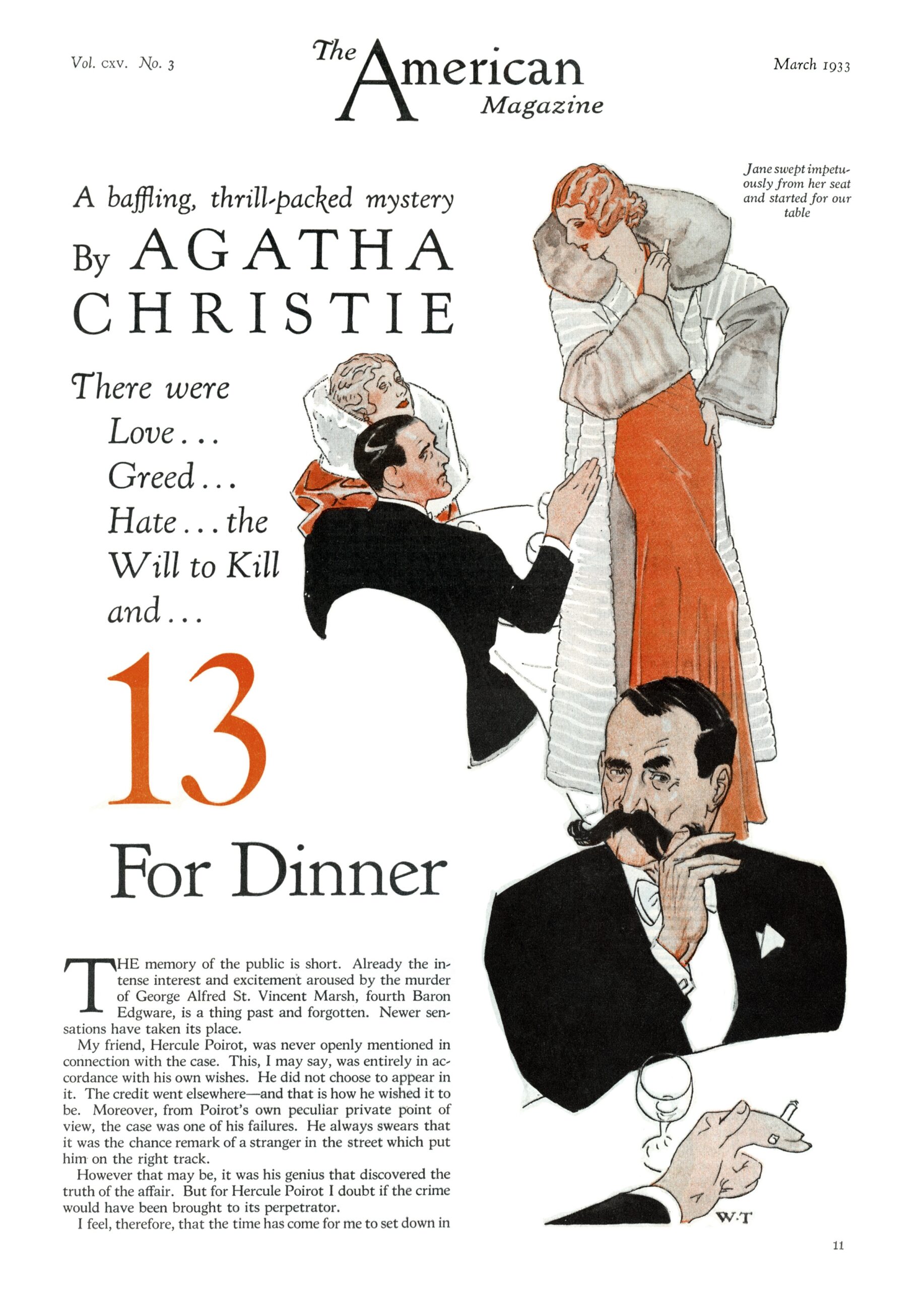
This reflection occurred to me in the wake of Tom Hanks’ statement; he clearly expressed his opinion about rewriting literature from the past for today’s sensibilities. Some publishing houses have taken the trouble to rewrite, or let’s not be afraid of the word, censor, Agatha Christie’s books, for example. Why? Because she used derogatory according to our social sensibilities of today, words and terms, as well as opinions, she described situations whose social background originated in her time in terms of mentality significantly different. If we censor her works, how much of Christie herself remains in them? Will they still be detective stories set in the first half of the 20th century, or will they still be fantastic literature with a detective plot? Will we do the same with Churchill’s memoirs, which contain a lot of racist statements? Will we take away his Nobel Prize, which he received precisely in the field of literature? And I will make the most extreme argument, what do we do with William Shakespeare’s “The Taming of the Shrew”? Which poet volunteers to rewrite this work? Or do we put this play on the index of banned works? After all, it is a hymn to the domination of man and the suppression of women, describing a world in which a wife is reduced to a docile servant-slave of her husband.
Where is the limit?
Someone will say that this only applies to pop culture; after all, detective stories of the past are not fine art. Yes, they are not, but pop culture is an equally important factor reflecting the mentality of past generations; we can not simply remove or change it. Pop culture is an important anthropological, sociological, literary, historical, and linguistic subject.
Pop culture is us.
Censoring literature and other works based on their authorship is just another side of repression. And the best intentions will not change this fact. Still, the world of Fahrenheit 451 lurks around the corner. And I, as Tom Hanks, would like to be able to decide what offends me; I don’t want someone to resolve it for me. That’s part of my freedom and right to express myself.
‘Let’s have faith in our own sensibilities here, instead of having somebody decide what we may or may not be offended by.’
Tom Hanks
On the other hand, one who is hurt by the past and feels bad about a culture that grew out of the experiences of the past has the right to talk about it; has the right to point out the evil that happened; has the right to protest, but should not censor the past.
In confronting the past, we can change our present; it is in confronting works from previous eras that we build our independent thinking and sensibility today.